
In the current business landscape, data is everywhere. Companies casually collect reams of data, whether they need it or not.
It’s stored with the hope of using it for later analysis or monetization. Sometimes this happens, and sometimes it doesn’t.
The problem is, all that data can pose a security risk if it’s not handled properly.
This guide looks at a potentially better way to handle data, zero data retention. You’ll learn what it is, how you can use it, and much more.
What Is Zero Data Retention?
When you hear “zero data retention,” it sounds like a buzzword, but it’s a shift in how companies think about privacy.
At its core, zero data retention means a system doesn’t keep your data once it’s no longer needed. The moment it serves its purpose, such as processing a payment, verifying your identity, or generating a result, it’s deleted.
Nothing stays behind for later analysis, marketing, or “product improvement.”
This idea challenges the traditional mindset where storing data was seen as an asset. For years, organizations kept as much information as possible because it could be mined for insights or monetized down the line.
Zero data retention flips that logic.
Instead of collecting and keeping, it focuses on minimizing and erasing.
Get rid of manual repetitive paperwork with robust document automation
LEARN MORE
You’ll see this approach gaining traction in services that handle sensitive information, such as encrypted messaging apps, VPN providers, privacy-first analytics tools, and even AI platforms that process user queries without saving them.
These companies are building trust by ensuring user interactions leave no digital trace once complete.
At its best, zero data retention reflects a “privacy by design” philosophy. It’s about building systems that respect user trust by default and not as an afterthought or compliance checkbox.
How Zero Data Retention Works
The idea of zero data retention sounds straightforward, but making it work in practice takes careful design.
You’re dealing with systems that still need to process information, but don’t keep it once the job is done. That means every step of data handling has to be temporary, controlled, and auditable.
Most organizations that follow a zero data retention model rely on ephemeral data processing. Data is processed in memory rather than stored on a physical drive. Once the task is complete, whatever that task may be, the data is wiped from memory.
There are no logs, no backups, and no cached copies lingering in the background.
Another piece of the puzzle is encryption. Even during those brief moments when data is being handled, it’s often encrypted in transit and at rest.
This ensures that if someone were to intercept it, they wouldn’t be able to make sense of it. You might also see tokenization or data masking techniques in place, which replace sensitive information with random values so nothing personally identifiable remains.
To maintain trust, companies usually adopt verification practices like third-party security audits or publish transparency reports that confirm they don’t store user data.
These steps help prove that “zero data retention” isn’t just a marketing slogan. Rather, it’s part of a documented and verifiable policy that the company adheres to.
In short, the process depends on a tight feedback loop: collect what you must, process it quickly, and delete it completely.
Done right, this creates a system that still functions efficiently without leaving behind a trail of information that could one day be exposed, misused, or subpoenaed.
Benefits of Zero Data Retention
Adopting a zero data retention policy brings a long list of benefits that go beyond privacy. When you stop storing unnecessary information, you’re reducing exposure, simplifying compliance, and building stronger relationships with users who value transparency.
The most obvious benefit is privacy protection.
If you’re not storing personal data, there’s nothing to steal, leak, or misuse. It’s the simplest form of risk reduction because you’re removing the very thing attackers are after.
Instead of spending energy on protecting massive databases, your systems can focus on safeguarding the data that needs to exist.
It also helps with regulatory compliance. Privacy laws like GDPR and CCPA require you to justify why you’re holding onto data.
When you practice zero retention, you automatically meet one of their key principles: data minimization.
You’re showing regulators that you collect only what’s necessary and for as long as it’s needed and nothing more.
Then there’s the trust factor. Users are becoming more aware of how their information is handled. When you make it clear that you don’t keep data after it’s processed, you’re sending a strong message that privacy isn’t negotiable.
That kind of transparency can become a competitive advantage, especially in industries where reputation and trust matter more than ever.
There’s also an operational upside.
Managing stored data takes time and money. You have to secure it, maintain it, and ensure it’s backed up properly. With zero data retention, you eliminate that burden.
Fewer storage systems mean fewer risks, fewer costs, and fewer headaches when something goes wrong.
Taken together, these benefits make zero data retention as much a strategic decision as a technical one. It’s about creating a culture where privacy, security, and efficiency all align.
Why Zero Data Retention Matters
You’re living in a time when privacy isn’t just a preference; it’s an expectation.
People want to know that the data they share won’t linger on a server waiting to be exposed, misused, or sold.
Zero data retention matters because it shifts the balance of control back to the user. It shows that you value consent, security, and transparency more than data hoarding.
For businesses, it’s becoming a signal of integrity.
Document and customer insights at your fingertips
LEARN MORE
When you tell users you don’t store their information, you’re making a public commitment to protect their trust.
That trust has real value. It shapes how customers perceive your brand, how regulators view your compliance posture, and how partners assess your reliability.
In competitive markets, that trust can be the difference between adoption and avoidance.
There’s also a broader ethical layer to consider. Every piece of data you keep carries responsibility.
Even if you never misuse it, it can still become a liability in the wrong hands. Breaches, leaks, and accidental exposure all happen because data exists somewhere it shouldn’t.
By removing that risk entirely, you’re reducing the chance of harm and demonstrating accountability in a world that often lacks it.
Zero data retention also aligns with the future direction of technology.
As privacy laws tighten and digital ecosystems become more complex, holding onto less information will be an advantage rather than a constraint.
Companies that build these principles into their systems early will adapt faster to new regulations and user expectations.
Ultimately, zero data retention matters because it represents a mindset shift. It’s a commitment to doing less with data but doing it better.
It’s proof that you can build powerful, efficient systems without compromising the privacy of the people who use them.
7. Real-World Examples
Signal
Signal has built its entire reputation on privacy, and zero data retention is central to that promise.
The app doesn’t store message history on its servers, nor does it keep metadata that could identify who you’re talking to or when.
Messages are encrypted end to end, processed in real time, and then removed from Signal’s servers once they’re delivered.
Even the company can’t access your conversations. This approach has made Signal a benchmark for what true privacy in communication looks like.
ProtonMail
ProtonMail, the encrypted email service based in Switzerland, takes a similar approach. It doesn’t log IP addresses or retain message data once it’s been delivered.
All encryption happens on the client side, meaning ProtonMail’s servers never see your decrypted content.
The company also uses transparent legal policies to show that user privacy is protected even under government requests.
Its model illustrates how zero data retention can coexist with high functionality and reliability.
Mullvad VPN
Mullvad is a VPN provider that’s become synonymous with privacy-first design.
It doesn’t require personal information to sign up, not even an email address. The service keeps no logs of user activity, connection times, or bandwidth usage.
Each user receives a random account number that can’t be traced back to an individual.
Mullvad’s transparency reports and third-party audits confirm that its infrastructure is built around a strict zero data retention policy.
Privacy-Focused Analytics Tools
Traditional analytics platforms rely on tracking user behavior across websites, but privacy-first tools are changing that.
Platforms such as Plausible and Simple Analytics collect minimal, aggregated data without storing personal identifiers or using cookies.
They provide insights into website performance while respecting user privacy. This approach shows that you can still make informed business decisions without retaining sensitive information.
Take advantage of AI-powered document drafting to move 4X faster
LEARN MORE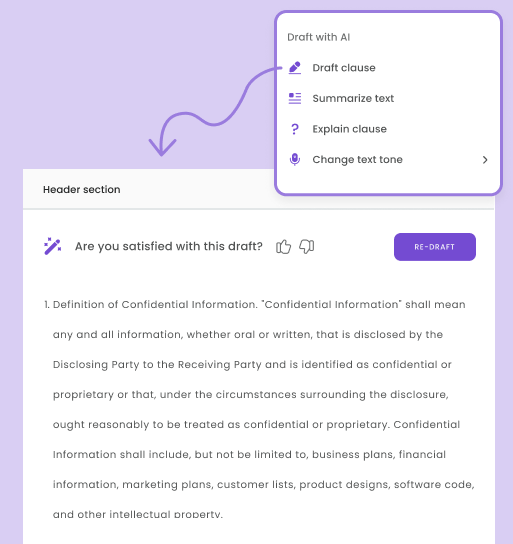
How Businesses Can Adopt a Zero Data Retention Policy
Moving toward zero data retention doesn’t happen overnight. It requires careful planning, clear communication, and a willingness to rethink how your systems handle information.
The good news is that the process can start small and scale gradually as your infrastructure matures.
Audit What You Collect
Begin by taking a close look at the data your organization gathers. Identify what’s essential and what isn’t.
Many companies discover they’re collecting far more than they use. Once you understand the scope, classify information by purpose and retention period.
Anything without a clear need or business justification should be eliminated.
Redesign for Temporary Processing
Next, focus on how data moves through your systems. The goal is to process information in real time and avoid long-term storage.
This might involve shifting to in-memory processing or adopting tools that support ephemeral sessions.
Encrypt data in transit and at rest, even if you plan to delete it immediately after use. Secure deletion practices are just as important as storage controls.
Implement Clear Privacy Controls
Establish clear internal policies that define how and when data is deleted. Automate deletion wherever possible to avoid human error.
You can also introduce anonymization or tokenization to ensure that even during processing, personal details aren’t exposed.
Make sure your privacy policies reflect these practices so users understand exactly how their data is handled.
Verify and Communicate
Transparency builds trust.
Work with independent auditors or publish data-handling summaries to verify that your systems follow zero retention principles.
If users know you’re deleting data right after it’s used, they’re more likely to trust your services. Use that transparency as a differentiator in your industry.
Adopting zero data retention isn’t just about compliance. It’s a long-term investment in user trust, operational efficiency, and ethical technology.
As privacy expectations rise, this kind of discipline will set you apart from organizations that still treat data as something to collect and keep forever.
Conclusion
Zero data retention is more than a buzzword; it’s a paradigm shift in the way we handle information.
It reduces liability, improves trust, and allows you to set yourself apart from others. At the same time, it takes a true commitment from everyone in your organization.
The beginning is hard, but it gets easier.
If other companies that are doing it are an indication, it’s a strategy that’s worth the upfront costs.
Let me know what you think about zero data retention in the comments, and don’t forget to share.