When you sign on the dotted line, you’re good to go – right?
Not exactly.
It’s just the start of another process you must complete to be compensated fully.
Unfortunately, not all contracts meet their potential and fall victim to what’s known as contract value leakage.
It’s a silent killer that can be controlled if you know the signs to look out for.
In this guide, you’ll learn what contract value leakage is, why it matters, and ways to reduce its impact or prevent it altogether.
What Is Contract Value Leakage
Contract value leakage happens when the value you expected to receive from a contract ends up being more than the value you realize in practice.
Get rid of manual repetitive paperwork with robust document automation
LEARN MORE
In other words: expected value minus realized value = leakage. For many organizations, this is a meaningful amount.
The International Association for Contract & Commercial Management (IACCM) estimates companies lose, on averag,e about 9 % of contract value due to leakage.
Common Sources
You’ll see leakage creep in at multiple points in the contract lifecycle. Some common sources include:
- Unclear or ambiguous contract scope or terms. If what constitutes performance or deliverables isn’t clearly defined, you may end up delivering less (or paying more) than anticipated.
- Poor contract management post-signature. Once the contract is live, missed milestones, untracked obligations or weak performance monitoring lead to value erosion.
- Pricing or billing issues. Undercaptured pricing, unclaimed discounts, over-payments, or unbilled services can all feed leakage.
- Scope creep or change in external conditions. Contracts may be impaired if requirements drift, costs escalate, or market changes affect value delivery.
Direct vs Indirect Leakage
- Direct leakage is the tangible loss: for example, you expected $1,000,000 in revenue and you only captured $900,000 because a deliverable wasn’t billed or a discount wasn’t enforced. That $100,000 is direct leakage.
- Indirect leakage is more subtle and longer-term: it may include damaged supplier or customer relationships, missed renewal or upsell opportunities, brand or compliance risk that reduces future contract value. For example, if the inability to monitor obligations leads to under-deliveries, you might lose the renewal or future business.
Illustrative Scenario
Imagine you, as in-house counsel for a mid-sized enterprise, negotiate a three-year outsourcing contract with a supplier.
You budgeted for 100,000 units of service at $50 per unit, expecting $5,000,000 value over the term.
After signing, you discover: the contract scope is vague (what counts as a “unit of service” isn’t clearly defined), the supplier misses several milestones, and your team fails to invoice for extras that weren’t clearly captured.
At the end of year 1, you realize you obtained only 80,000 units and paid hidden costs for rework.
In year 3, you find you’re locked into an auto-renewal clause at higher rates because you missed the renewal window. Altogether, the realized value is maybe $4,300,000 instead of $5,000,000.
That $700,000 shortfall is direct leakage. Meanwhile, you also lost potential future upsells because the supplier’s under-performance damaged the trust. That is indirect leakage.
Why Contract Value Leakage Matters
Financial Impact
You’re always aiming for the contract to deliver the value you negotiated. But when you miss that mark, the shortfall hits your bottom line.
For instance, the average organization loses around 9% of contract value due to leakage across its contract portfolio.
In practical terms, on a $100 million contract portfolio, you could be walking away with $9 million less than expected. That’s not just a rounding error. It’s a serious profit drain.
Operational Implications
When contracts don’t deliver as planned, you face more than lost dollars, and you deal with an operational mess. Missed deliverables, weak performance tracking, disconnected systems, and unclear ownership all create inefficiencies.
One research report shows that up to 80% of contract and supplier-management teams’ time can be swallowed by data management and reporting instead of strategic work.
You lose agility. You waste resources. You risk missing the real opportunities the contract was supposed to unlock.
Reputational and Compliance Risks
Beyond the numbers, leakage erodes trust with vendors, partners, internal stakeholders, and regulators.
Imagine a key service partner under-delivering, and you failing to act because obligations weren’t tracked. That damages the relationship and you may lose renewal or upsell potential.
On the compliance side, studies found that 78% of companies do not systematically track contractual obligations.
When you fail compliance or miss audit triggers, you expose the organization to regulatory fines, reputational damage, and a weakened negotiating posture for future agreements.
To frame how big the issue is:
- One benchmark study shows that among over 1,100 companies, the median typical rate of contract value leakage is around 5%. APQC
- Another found that organizations reported losses “up to” 10.9% or more of contract value in certain periods.
- Some sectors (for example, in detailed financial-services data) report 8-9% average post-signature leakage. Sirion
These things matter: when you’re managing hundreds or thousands of contracts across procurement, suppliers, customers and partners, the cumulative impact of even a 5–9% gap quickly becomes material.
Document and customer insights at your fingertips
LEARN MORE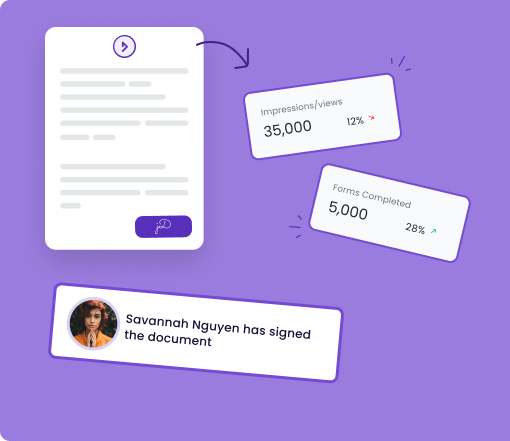
Common Causes of Contract Value Leakage
You often see contract value leakage when you don’t have visibility into all your obligations and when your contract ecosystem is fragmented.
When obligations sit across spreadsheets, shared drives, or in the heads of individual stakeholders, you lose the single source of truth you need.
Research by Oneflow showed that companies managing contracts in separate systems or using manual processes suffer longer cycle times and increased risk.
Manual processes and siloed data create one of the most basic yet damaging causes of leakage.
If you’re still depending on spreadsheets, email chains, or disparate systems for contract creation, approvals or tracking, then things like version-control errors, missed clauses, or undocumented changes become likely.
Poor interdepartmental communication
Another critical issue is ineffective handover between legal, procurement, and operations teams.
You might have negotiated a contract with perfect terms, but if procurement doesn’t communicate the deliverables clearly to operations, or if operations isn’t aligned with finance to track billing, you set yourself up for value erosion.
When departments operate in silos and workflows aren’t connected, you create gaps where commitments slip, deadlines are missed, and the contract doesn’t deliver as intended.
Contract design
Poor contract design is another root cause. If your contract uses unclear language, missing service level agreements (SLAs), poorly defined scope, or vague deliverables, you leave too much room for interpretation, dispute, or non-performance.
Weak terms and missing standard templates lead organizations to settle for sub-optimal agreements, and that’s often the corridor through which leakage moves.
Poor monitoring
Finally, failure to monitor supplier performance or enforce compliance under the agreement is a major leakage channel.
You might have done the negotiation and signed the agreement, but if you don’t track that the supplier is delivering, that you’re enforcing price increases, or that you’re controlling scope creep, you end up letting value slip away.
When obligations sit unmonitored or when audits and reviews are not systematic, you introduce unseen risk and cost.
How to Stop Contract Value Leakage
Centralize and Digitize Contracts
The first step to reducing contract value leakage is to make every contract visible and accessible. When agreements are stored across inboxes, drives, and shared folders, you can’t easily track performance or obligations.
Centralizing your contracts in a digital repository like DoxFlowy gives your team a single source of truth. It also helps you locate critical clauses, check renewal dates, and review historical versions without wasting hours searching.
Research from World Commerce & Contracting found that organizations with centralized digital contract management are significantly more likely to meet compliance and performance targets compared to those relying on manual systems.
Automate Key Workflows
Automation is how you close the gaps that cause value to slip away unnoticed. By setting up alerts for renewals, obligations, and milestones, you ensure no key date or deliverable goes unchecked.
Workflow automation also removes manual handoffs that can slow approvals or create bottlenecks. The goal isn’t to replace human judgment; it’s to prevent oversight.
When your contract lifecycle management (CLM) platform automatically routes documents for review and flags upcoming actions, you protect value before it’s lost.
Take advantage of AI-powered document drafting to move 4X faster
LEARN MORE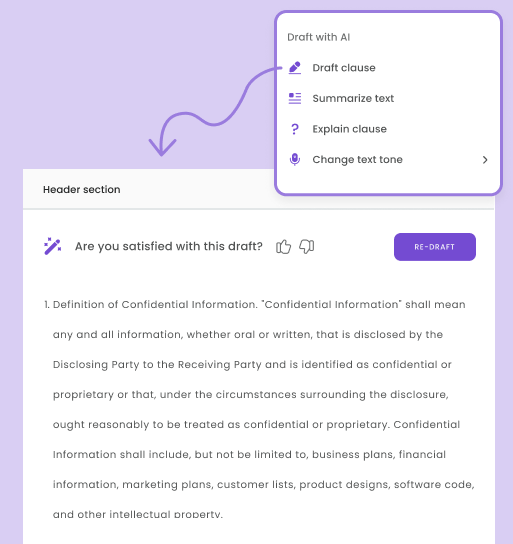
Improve Contract Design
Every well-drafted contract is a risk management tool. You reduce leakage when your clauses, terms, and performance metrics are standardized and clear.
Start with consistent templates that define deliverables, responsibilities, and service levels in measurable terms.
Avoid vague or aspirational language that leaves room for interpretation. If you manage large contract volumes, building a clause library helps maintain consistency across agreements and minimizes the likelihood of missing key protections.
Clear drafting also makes post-signature management easier because every obligation is traceable.
Enhance Cross-Functional Collaboration
Even the most precise contract can fail if teams don’t stay aligned. Leakage often appears where legal, procurement, finance, and operations don’t communicate effectively.
You can minimize this by creating shared visibility into contract status and performance.
When finance teams understand legal’s intent, and operations know what procurement negotiated, everyone works toward the same outcomes.
Assign ownership and accountability for specific tasks within a contract. The result is fewer missed obligations and a stronger connection between business intent and execution.
Monitor and Audit Performance
Active monitoring is the safeguard that keeps contracts performing as designed. Periodic reviews of supplier performance, pricing adherence, and compliance confirm that value is being delivered as promised.
This also gives you early insight into issues like scope drift or underperformance. Auditing isn’t about catching mistakes; it’s about course correction before losses accumulate.
When you treat contracts as living assets instead of static documents, you create a feedback loop that keeps your organization aligned with contractual goals.
Conclusion
Contracts are important, but it’s the humans enforcing the contracts that make all the difference. If things are not handled properly, contract value leakage occurs, and you don’t get true value for the services you’re rendering.
This guide has looked at the impact of contract value leakage, why it happens, and steps you can take to reduce it.
Review your processes and identify where you need to make changes to get the most value out of your contracts.
If you’re looking to automate contract processes, be sure to check out DoxFlowy.