
Many people have the impression that lawyers and anything to do with the law is slow-moving and resistant to change.
While true in many cases, many legal professionals are open to change.
If you’ve been on the fence about adopting new technology, especially AI, now is the time to start making a change.
This guide will discuss various ways lawyers and related professions can use AI.
A word of caution. Don’t make massive changes at once, start small and work your way up.
Now, let’s look at the different ways lawyers can use AI to make more money, reduce wasted energy, and get ahead of the competition.
Get rid of manual repetitive paperwork with robust document automation
LEARN MORE
1. Legal Research and Case Analysis
Every lawyer knows the sinking feeling of realizing that the “perfect precedent” you found at 1 a.m. doesn’t support your argument.
AI can’t save you from caffeine jitters, but it can keep you from chasing the wrong cases. Modern AI research tools can sift through mountains of statutes, case law, and commentary in seconds.
They highlight relevant material, flag contradictory rulings, and occasionally make you wonder why you ever thought scrolling through PDFs at midnight was a good idea.
Instead of spending hours cross-referencing cases, you can use AI tools to handle the initial sweep.
They’re built to catch nuances that keyword searches miss, like similar fact patterns or implied reasoning. In other words, they do the grunt work, and you keep the glory.
A few key advantages come with that:
- You cut research time from hours to minutes.
- You improve accuracy by letting algorithms cross-check sources humans tend to skim.
- You get to sound brilliant in meetings because the right case “just came to mind.”
AI won’t replace your legal judgment, but it will stop you from drowning in irrelevant citations. Think of it as the overachieving intern who never needs coffee breaks or sleep.
2. Document Review and Due Diligence
If legal research is about finding needles in haystacks, document review is about sorting the hay by color, weight, and emotional tone.
It’s repetitive, time-consuming, and the sort of task that makes junior associates question their life choices. Luckily, AI is quite good at this sort of thing. That’s mainly because it doesn’t get bored.
AI tools can scan thousands of pages of contracts, emails, and disclosure documents without blinking (figuratively, of course). They spot key clauses, identify risks, and flag missing terms far faster than a human team.
It’s like having a superhuman paralegal who reads at the speed of light and never complains about eye strain.
You can train these systems to recognize red flags such as, a clause that shifts liability in a way that could ruin your client’s day.
They can also categorize documents for due diligence, highlight inconsistencies, and help you prioritize what deserves a closer look.
In practical terms, this means:
- Routine contract reviews take hours, not weeks.
- The “oops, we missed that clause” moments become rare (they don’t disappear altogether but close to it).
- Lawyers are then free to focus on the strategic parts of the job like negotiating better terms instead of deciphering boilerplate.
AI won’t sign off on your deal or catch a cleverly hidden landmine every time, but it’s a sharp-eyed assistant that never zones out halfway through a 200-page lease agreement.
3. Drafting Legal Documents
Every lawyer has that one document template that’s been copied, tweaked, and renamed so many times it’s practically a family heirloom.
AI can finally retire that relic.
With the right tools, you can generate first drafts of contracts, pleadings, NDAs, and more. They come complete with placeholders, standard clauses, and a healthy respect for your firm’s preferred phrasing.
The real perk isn’t that AI writes for you. Tt’s that it handles the boring first pass. It gives you a framework that’s coherent and consistent, which means you can spend your time tightening arguments and adjusting tone instead of wrestling with formatting.
Some tools even analyze previous documents to mirror your style, so your drafts don’t sound like they were written by a robot trying to impress a judge.
Here’s where it helps most:
- Drafting repetitive documents like employment contracts or lease agreements.
- Creating first versions of pleadings that need customization later.
- Maintaining consistency across a firm’s templates and client materials.
You still have to review and refine because AI may fall short when it comes to understanding your client’s “unique business context” (even if it says it does).
Document and customer insights at your fingertips
LEARN MORE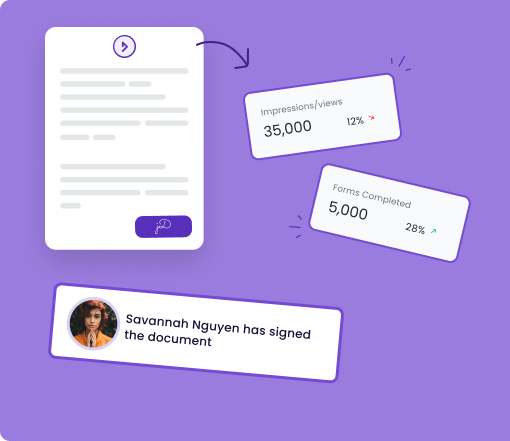
That said, it’s a handy shortcut that turns the blank-page panic into a quick edit session. Think of it as your legal ghostwriter who doesn’t expect credit in the footnotes.
4. Predictive Analytics for Case Outcomes
Every lawyer has been asked the impossible question: “So, what are our chances?”
Traditionally, that answer came from experience, intuition, and maybe a quick glance at how cranky the judge seemed last time. Now, AI gives that educated guess a bit more substance.
Predictive analytics tools analyze thousands of past cases to spot trends in rulings, settlement amounts, and judge behavior.
They can factor in details like jurisdiction, opposing counsel, and even the type of claim to give you a probability curve instead of a shrug.
It’s not magic, but it’s close enough to make clients think you’re psychic.
In practice, this means you can:
- Gauge the odds of success or settlement before committing resources.
- Develop more realistic timelines and budgets.
- Use data to back up your advice instead of relying on gut feeling alone.
Of course, AI doesn’t account for every twist. A surprise witness or an especially persuasive closing argument can still rewrite the odds.
But it gives you a statistical edge, which is as close as the legal world gets to cheating without losing your license.
5. Contract Management
Contracts have a funny way of disappearing the moment you need them. One day, they’re neatly filed away; the next, you’re frantically searching for the version that got signed.
AI can’t fix your filing habits, but it can make sure you never miss a renewal date or compliance deadline again.
AI-powered contract management systems keep track of key terms, obligations, and milestones automatically. They’ll remind you when a contract is about to expire, flag clauses that need renegotiation, and even suggest updates based on regulatory changes.
It’s like having a detail-obsessed assistant who never takes lunch breaks and genuinely enjoys calendar reminders.
Here’s what that looks like in practice:
- Automatic alerts for renewals, payments, and compliance checkpoints.
- Centralized access to every version of a contract. No more “final_v12_revised_REALfinal” chaos.
- Quick search and analytics to identify recurring risks or opportunities across multiple deals.
The beauty of it is that you can finally stop reacting to problems and start managing proactively.
Instead of scrambling to fix missed obligations, you’ll know what’s coming, when it’s due, and what needs attention. In other words, AI makes sure your contracts behave better than most people’s inboxes.
6. Client Communication and Chatbots
Clients love quick answers, preferably before they’ve finished typing the question. Unfortunately, lawyers aren’t exactly known for instant replies.
That’s where AI chatbots step in, acting as your ever-patient front line for routine questions and updates.
AI chatbots can handle the common stuff: scheduling consultations, providing case updates, or explaining basic procedures like “how to sign a retainer agreement without accidentally signing your soul away.”
Take advantage of AI-powered document drafting to move 4X faster
LEARN MORE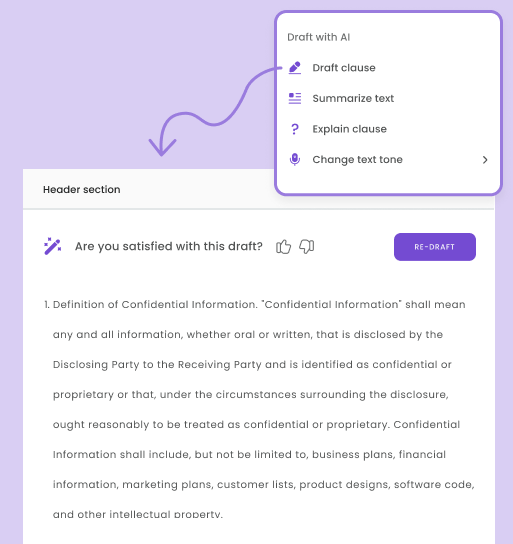
They’re not replacing personal interaction; they’re just keeping it from being interrupted every ten minutes by someone asking for the Wi-Fi password to your client portal.
A few useful perks include:
- Faster responses, even outside office hours.
- Reduced workload for support staff.
- Happier clients who feel heard, even when you’re in court.
And when things get complex, for example, someone asks whether their prenup covers cryptocurrency, you can step in with the human touch that AI still can’t mimic.
The chatbot keeps the lights on, and you get to focus on the conversations that need legal judgment instead of small talk with a billing timer.
7. E-Discovery
Few things strike fear into a lawyer’s heart like the words “data dump.”
Thousands of emails, messages, and attachments, most of them irrelevant, some of them embarrassing, and all of them due for review by next week. AI, fortunately, thrives in chaos.
With e-discovery tools, AI can crawl through mountains of electronic data to pinpoint what matters. It sorts, tags, and filters documents based on keywords, sentiment, and even context.
You can ask it to find every email mentioning “breach of contract,” and it won’t just grab the ones that literally say that. It’ll find the sneaky variations too.
Here’s how it helps in real life:
- Cuts review time dramatically by grouping similar files.
- Highlights patterns or anomalies humans might overlook.
- Reduces the odds of missing that one crucial email buried on page 12,347.
AI doesn’t get overwhelmed by volume or distracted by the occasional office meme buried in an evidence file.
It just keeps scanning, sorting, and ranking, thereby making e-discovery a little less like drowning in data and a bit more like skimming with a very smart lifeguard.
Conclusion
There are countless ways lawyers can use AI. This guide has only touched on the surface. Some of the most important things it can do for you are to analyze large amounts of data, conduct legal research, and conduct case analysis.
That alone will give you back countless hours to focus on more high-value tasks. With that being said, you should start small and work your way up. That way, you can put checks and balances in place while you’re still getting used to AI.
Let me know what you think in the comments, and be sure to check out DoxFlowy for your document automation projects.